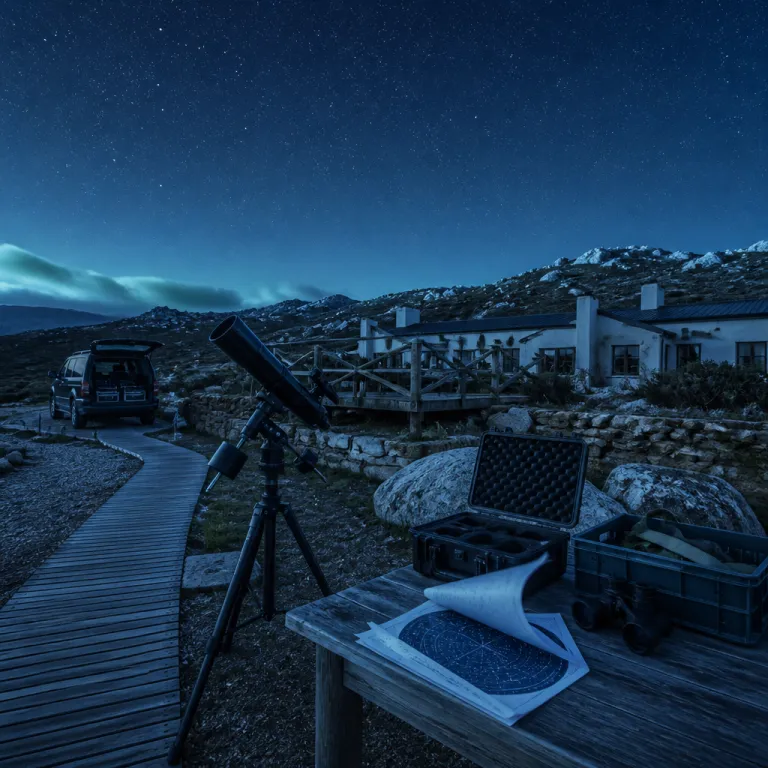
Why Uruguay’s interior is the new quiet luxury for stargazing
Leave Montevideo and the resort belt behind and the sky changes. Within a couple of hours the night sky over Uruguay sheds the coastal glow, and a genuinely dark sky settles over low sierras, estancias and quiet river valleys that feel made for the solo explorer. This is where stargazing Uruguay dark skies stops being an abstract idea and becomes a lived experience under stars that feel almost within reach.
For travelers used to the high altitude clarity of the Atacama Desert in Chile, Uruguay’s appeal is different yet equally compelling. Here in the south of Latin America, the lack of light in the interior is the real luxury, and the best stargazing experiences happen where there is no formal observatory at all, only silence and a host who knows when to cut every light. The contrast with the coast is stark ; beach towns keep growing, light pollution creeps inland, and the sky dark quality that solo travelers seek now sits firmly in the northern sierras and rural departments like Salto, Tacuarembó and Paysandú.
Think of this as a new map for night skies in the southern hemisphere. Instead of chasing the sky best views from San Pedro de Atacama or a famous national park in Chile, you follow a quieter route through Uruguay’s interior, where Bortle 4 or better skies are still normal. The best places are not marked by domes or a sky association sign, but by a gravel track, a windbreak of eucalyptus and a host who understands that the night is the main event.
Lavalleja and Rivera: valleys, biospheres and awe inspiring dark sky stays
The northern sierras start to show their character in Lavalleja, where Salto del Penitente park and the Valle del Hilo de la Vida offer some of the best stargazing in Uruguay. These are not high altitude plateaus like the Atacama Desert, yet the combination of rolling hills, low horizons and a remarkable lack of light creates night skies that feel surprisingly deep. On clear winter nights between June and August, the Milky Way arches over the rocks and the constellations of the southern hemisphere stand out with an almost tactile clarity.
Valle del Hilo de la Vida sits within the broader Bioma Pampa-Quebradas del Norte, a UNESCO-MAB Biosphere Reserve that stretches into Rivera and protects a mosaic of quebradas, grasslands and native forest. Here, photographer Fefo Bouvier runs his ‘Mirá las estrellas’ project, guiding guests through stargazing experiences that are as much about reading the land as reading the sky. He works without a traditional observatory, using the natural amphitheater of the valley as his dark sky dome, and his sessions are a strong entry point for solo travelers who want their first structured night sky experience in Uruguay.
Pairing these skies with the right stay is essential for a luxury focused traveler. Rural estancias and refined country retreats in the sierras, like those featured in our guide to Uruguay’s natural elegance and country retreats, often sit on private land where the night skies are protected by design. Hosts can arrange late dinners to respect the dark, switch off exterior light completely and set up simple yet comfortable stargazing experiences with blankets, loungers and a glass of Tannat under the stars.
Rocha and the eastern sierras: from coastal light to inland night skies
Rocha is usually sold on its Atlantic beaches, but the real sky dark magic lies inland at Cerro de la Buena Vista and the surrounding sierras. Once you leave the coastal strip and its growing light pollution, the night sky opens up quickly, and the best places for stargazing Uruguay dark skies are often a short drive from the ocean yet feel worlds away. The hilltops here offer wide horizons to the south and west, ideal for tracking constellations as they wheel over the countryside.
For a solo traveler, the smart move is to split time between the coast and the interior. You might spend a couple of nights at a refined coastal retreat near Santa Teresa, using a base such as the properties we review in our guide to Santa Teresa National Park and Rocha’s wild heart, then shift inland to a sierra estancia where the night skies are the main draw. This combination lets you enjoy the best stargazing conditions without giving up daytime access to beaches, trails and the national park coastline.
Rocha’s interior does not compete with the high altitude clarity of San Pedro de Atacama, yet its dark sky character is more intimate and often more accessible. There is no need to acclimatize, no desert extremes, only a gentle landscape where the lack of light becomes the quiet luxury you came for. Under these skies, the southern hemisphere constellations feel like a private show, and the experience is less about ticking off celestial objects and more about letting the night reset your sense of time.
Tacuarembó, Salto and Paysandú: Bortle 4 country for serious stargazers
Head north and the road unspools into cattle country, where Tacuarembó, Salto and Paysandú are singled out for genuinely dark skies that reach Bortle scale 4 or lower. These departments sit far from the coastal glow, and the lack of light is not curated but simply part of rural life, which makes them some of the best places for stargazing Uruguay dark skies. For a solo explorer, this is where the night sky stops being a backdrop and becomes the main reason to visit.
In Tacuarembó, Quebrada Laureles offers an awe inspiring setting of cliffs and native forest, with night skies that feel almost theatrical when the Milky Way rises over the canyon walls. Salto and Paysandú, better known for riverside life and thermal waters, hide pockets of sky best darkness in their rural hinterlands, where estancias double as informal observatories once the last generator is switched off. There is no formal sky association managing these sites, but local hosts understand that their dark sky is an asset and are increasingly willing to adapt lighting and schedules for guests who prioritize the night.
Planning here is about timing and logistics rather than altitude or desert dryness. Aim for the new moon period and, if possible, the clearer months from June to August, when cool, stable air often delivers the best stargazing experiences in this part of Latin America. Build in slow travel ; distances are modest, but the real luxury lies in lingering on a veranda after dinner, watching the stars sharpen as every remaining light goes out and the night skies settle into their full depth.
How to pair luxury stays with Uruguay’s dark skies as a solo traveler
Choosing the right property is the difference between a pleasant rural stay and a truly incredible stargazing experience. Many of Uruguay’s premium estancias and country lodges sit on land with naturally dark skies, yet not all of them are set up to prioritize the night sky for guests. Look for hosts who are willing to manage exterior light carefully, offer late check in flexibility and understand why you care about the exact time of year and moon phase.
For a solo traveler, a small scale estancia or sierra inn often feels more welcoming than a large resort. You gain access to private land where the night sky is protected, plus the safety and comfort of a hosted environment where someone can walk you to a field gate at midnight and leave you with a thermos and a red filtered torch. Properties that already lean into wellness or slow travel, such as the coastal retreat we review in our feature on light bathing and seasonal coastal stays, tend to understand why darkness itself can be a form of luxury.
Do not expect a traditional observatory experience with domes and guided telescope sessions in every region. Uruguay’s stargazing experiences are mostly about landscape, darkness and the southern hemisphere constellations seen with the naked eye or through simple binoculars, not about high altitude science centers like those in Chile’s Atacama Desert near San Pedro de Atacama. That honesty is part of the appeal ; you are not buying a packaged show, but stepping into a rhythm where the night, the stars and the quiet of the countryside set the pace.
Practical planning: timing, expectations and the solo stargazer’s route
Astrotourism in Uruguay rewards travelers who plan around the sky rather than the calendar of festivals or beach seasons. Start by choosing the time of year that aligns with your tolerance for cool nights and your desire for clear skies, with many serious observers favoring the stretch from June to August for its stable conditions. Then layer in the lunar cycle, aiming for new moon windows when the night sky is at its darkest and the Milky Way and fainter constellations stand out.
Because formal observatories are scarce, your route should follow landscapes rather than institutions. A classic solo loop might run from Lavalleja’s Salto del Penitente park and Valle del Hilo de la Vida, up through Rivera’s biosphere landscapes, then west toward the rural zones of Tacuarembó, Salto and Paysandú where Bortle 4 night skies are still common. Along the way, you can weave in Rocha’s Cerro de la Buena Vista if you want to balance the interior with a taste of the Atlantic, always keeping an eye on how light pollution shifts as you approach or leave the coast.
Set your expectations clearly and you will find the experience deeply rewarding. This is not the high altitude, ultra dry desert astronomy of Chile’s Atacama region or the polished infrastructure of a flagship national park observatory, but a quieter, more personal way of engaging with the sky. Under Uruguay’s darkest skies, the luxury lies in the lack of light, the silence around you and the sense that, for one night at least, the stars are performing for an audience of one.
FAQ
Is Uruguay really good for stargazing compared with Chile or the Atacama Desert?
Uruguay cannot match the extreme altitude and desert dryness of Chile’s Atacama Desert, but it offers a different kind of stargazing strength. The interior has extensive areas with low light pollution, and several regions reach Bortle scale 4 or better, which is excellent for naked eye observing. For travelers who value comfort, easy access and quiet luxury over scientific observatories, Uruguay’s dark skies can be just as satisfying.
Where are the best places in Uruguay for dark sky stargazing?
The strongest dark sky regions are in the interior, away from Montevideo and the main coastal resorts. Named spots include Cerro de la Buena Vista in Rocha, Salto del Penitente park and Valle del Hilo de la Vida in Lavalleja, Quebrada Laureles in Tacuarembó and rural areas of Salto and Paysandú. These locations combine low light pollution with open horizons, making them some of the best places for stargazing Uruguay dark skies.
Do I need to join a guided tour for stargazing in Uruguay?
You can stargaze independently from many rural properties, but a guided experience can add depth, especially on your first visit. Photographer Fefo Bouvier’s ‘Mirá las estrellas’ sessions at Valle del Hilo de la Vida are a good example, blending practical sky orientation with storytelling about the landscape. In other regions, estancia hosts often provide informal guidance, such as suggesting the best viewing spots and adjusting lighting for you.
What is the best time of year to plan a stargazing trip to Uruguay?
Clear, cool nights in winter and early spring often provide the most stable conditions, so many travelers target the period from June to August. Whatever month you choose, try to align your stay with the new moon phase, when the night sky is darkest and the Milky Way and faint constellations are most visible. Always check local weather patterns for your chosen region, as cloud cover can vary between the coast and the interior.
Can I combine luxury accommodation with serious stargazing in Uruguay?
Yes, many premium estancias and refined country retreats sit in areas with naturally dark skies and low light pollution. When booking, ask specifically about exterior lighting policies, open land access at night and any stargazing friendly amenities such as loungers, blankets or binoculars. Choosing properties that already emphasize nature, wellness or slow travel will usually give you the best balance between comfort and night sky quality.