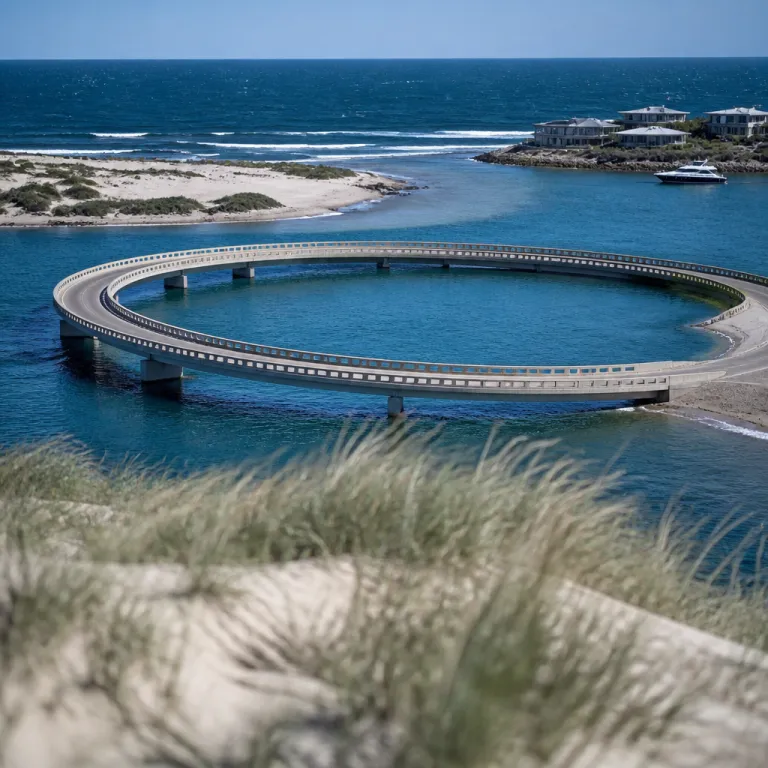
Laguna Garzón bridge as a gateway to Uruguay’s most pristine coastal stays
The Laguna Garzón Bridge is far more than a piece of infrastructure. This circular bridge over Laguna Garzón quietly reshapes how discerning travelers move between Rocha and Maldonado, opening a refined corridor to Uruguay’s most pristine coastal retreats. For anyone planning a luxury stay, understanding this bridge and its surroundings helps you choose the right hotel in the right area.
Set along National Route 10, the bridge Uruguay travelers now rely on replaced an unreliable ferry that once limited access to high-end properties. The structure connects the departments of Rocha and Maldonado, turning what used to be a seasonal challenge into a smooth, year-round journey between Garzón, José Ignacio, and the wider Maldonado coast. This improved access has transformed real estate dynamics and hotel development patterns on both sides of the lagoon.
Architect Rafael Viñoly designed the circular bridge to respond to the sensitive lagoon environment. The project’s ring-shaped layout reduces the footprint on the water while maintaining a bridge length of approximately 202 meters, a figure cited in technical data released by Uruguay’s Ministry of Transport and Public Works (MTOP). For travelers, that means you can stay in a secluded property near Laguna Garzón yet still reach José Ignacio or Punta del Este in under an hour, even when traffic is slow in peak season.
The bridge opens a window onto a pristine coastal landscape that luxury hotels now integrate into their guest experience. Many premium properties in Rocha and Maldonado offer guided drives that cross the Garzón bridge at sunrise, pairing the circular route with curated breakfast stops in nearby Garzón town. As one José Ignacio hotel manager explained in a local tourism feature, “We treat the crossing over Laguna Garzón as the moment guests feel they have truly arrived at the coast.” When you book, ask your hotel concierge whether they include a private transfer over the bridge Laguna route, because this detail often signals a property that truly understands the destination.
For travelers comparing stays, the area around Puente Laguna Garzón offers a different rhythm from central Punta del Este. Here, the pristine coastal setting feels quieter, and the bridge encourages drivers to slow down and engage with the landscape rather than rush past it. That same philosophy now shapes many luxury hotel concepts nearby, where low-density design and lagoon-facing suites prioritize silence, space, and long views over the water.
From circular design to circular itineraries: planning stays around Laguna Garzón
The circular bridge at Laguna Garzón does more than connect two points on a map. Its distinctive design encourages drivers to reduce speed, which naturally lengthens the journey and invites you to build a more layered itinerary between Rocha and Maldonado. For luxury travelers, that slower pace pairs beautifully with multi-night stays that alternate between oceanfront suites and rural estancias.
Architects working with high-end hotels in this area often reference how the bridge opens window-like perspectives onto the lagoon and dunes. Many new properties echo the bridge Rafael Viñoly created, using curved decks and panoramic glazing to frame the same water views guests admire while walking the pedestrian ring. When you browse hotel photos, look for this kind of thoughtful design, because it usually signals collaboration with serious architects rather than generic resort templates.
The Laguna Garzón Bridge also shapes how private drivers and hotel chauffeurs structure transfers. Instead of a straight dash along National Route 10, they now plan circular itineraries that loop through Garzón village for lunch, then continue toward José Ignacio or La Pedrera for check-in. If you value architecture, ask your hotel to arrange a route that includes other design-forward properties along the coast, and use this curated guide to design hotels in Uruguay where contemporary architecture meets Atlantic light as a reference when you shortlist stays.
Because the bridge Uruguay authorities commissioned was intended to preserve the lagoon, many luxury hotels now highlight their environmental credentials. You will see properties emphasizing low-impact construction, raised walkways over wetlands, and lighting schemes that protect birdlife around the lagoon. MTOP communications and departmental planning documents from Rocha and Maldonado repeatedly stress the need to balance access with conservation, and genuine eco-luxury properties in the area tend to echo that language in their own sustainability reports. When booking, compare how clearly each hotel explains its relationship with the water and surrounding commons, since genuine eco-luxury goes beyond marketing language.
Travelers interested in photography often plan their stays around the bridge’s most photogenic moments. The circular bridge becomes a luminous ring at dusk, and some hotels time sunset cocktails so guests can reach the pedestrian paths just as the sky turns pink over the lagoon. If you are staying on the Rocha side, ask whether your hotel offers bicycles or e-bikes, because cycling across Puente Laguna Garzón at golden hour is one of the most memorable ways to experience this area.
Architectural icon meets high end hospitality: how Rafael Viñoly’s bridge influences hotel design
The Laguna Garzón Bridge is inseparable from the name Rafael Viñoly, one of Uruguay’s most internationally recognized architects. His circular bridge over the lagoon has become a reference point for designers and hoteliers who want to align their properties with contemporary Uruguayan architecture. When you choose a luxury hotel near Garzón, you are often choosing a property that has been shaped, directly or indirectly, by Viñoly’s influence.
Viñoly Architects conceived the bridge as a circular structure that would slow vehicles and create a pedestrian-friendly ring above the water. Official explanations from Uruguay’s Ministry of Transport and Public Works summarize the intent clearly: “Why is the Laguna Garzón Bridge circular? To slow down traffic and provide scenic views.” This philosophy now appears in hotel masterplans, where curved circulation paths, slow transitions between indoor and outdoor spaces, and generous terraces echo the bridge’s gentle geometry.
Several architects working in Rocha and Maldonado reference both the bridge Rafael Viñoly designed and earlier Uruguayan masters such as Eladio Dieste. If you are passionate about architecture, consider structuring your trip around key works, from Dieste’s brick vaults to contemporary coastal hotels, using this in-depth route on the Dieste effect and the hotels he inspired as a planning tool. Then, anchor your stay near Laguna Garzón so you can experience how Viñoly’s circular design translates into a living piece of infrastructure.
Hotel owners and real estate developers often mention how the bridge opened a new chapter for high-end projects in this pristine coastal corridor. Eduardo Costantini, who funded a substantial share of the bridge’s construction, has also been involved in ambitious real estate ventures that pair art, architecture, and hospitality along the Uruguayan coast. MTOP press releases and coverage in major Uruguayan newspapers such as El País and El Observador consistently cite a total project cost in the area of 10 million USD, with Costantini assuming the majority of that investment, underscoring the strong link between the bridge and high-end real estate development along this stretch of coast. When you evaluate luxury properties, look for those that treat the Garzón bridge as part of a broader cultural landscape rather than just a convenient crossing.
Photography of the bridge by Jimmy Baikovicius, widely shared under Wikimedia Commons licenses and echoed in local press coverage, has also shaped how hotels present themselves visually. Many properties now frame their marketing images to echo those iconic shots, using circular pools, ring-shaped decks, or aerial views that reference the bridge Laguna composition. If a hotel’s imagery feels aligned with this architectural language, you can usually expect a more design-conscious experience once you arrive.
From ferry crossing to curated journey: what the bridge changes for luxury guests
Before the Laguna Garzón Bridge existed, reaching remote stretches of Rocha often meant relying on a small ferry. That crossing could be slow, weather dependent, and incompatible with the seamless transfers luxury travelers expect from premium hotels. The new bridge transformed that experience, turning a logistical hurdle into a curated moment within the journey.
Today, many five-star properties treat the Garzón bridge as a highlight rather than a mere segment of National Route 10. Chauffeurs often pause on the circular bridge so guests can step onto the pedestrian ring, feel the breeze over the lagoon, and take photographs of the water and dunes. This pause encourages drivers to slow down, but it also encourages guests to mentally shift from city pace to coastal time.
Because the bridge opens window-like vistas in every direction, hotels have started to design transfer experiences around specific times of day. Some arrange late-afternoon arrivals so that the sun sits low over the lagoon, while others schedule early morning crossings when birdlife is most active around the water. A Rocha-based guide quoted in regional tourism brochures notes that “crossing the bridge at first light is like watching the lagoon wake up,” a sentiment many luxury guests now request their hotels to build into arrival or departure times. When you book airport or city transfers, ask your hotel whether they can time your journey to align with these natural rhythms.
The improved reliability of the bridge Uruguay authorities delivered has also expanded the radius of feasible day trips from high-end bases like José Ignacio. Guests can now stay in a seafront suite in Maldonado or Rocha and still spend a full day exploring quieter beaches and estancias deeper into Rocha, returning over Puente Laguna Garzón after dinner. This flexibility makes it easier to combine ultra-private stays with more social evenings in nearby coastal towns.
For travelers who value privacy, the bridge’s limited daily vehicle flow keeps traffic relatively light compared with major highways. MTOP traffic counts released around the opening reported a few thousand vehicles per day in high season, a volume that remains modest by international standards and helps preserve the pristine coastal character of the area, even as new real estate projects appear on both sides of the lagoon. When choosing a hotel, consider how far it sits from the bridge, because properties slightly removed from the main access road often feel more secluded while still benefiting from the improved connectivity.
Choosing the right luxury hotel near Laguna Garzón for architecture, nature, and privacy
Staying near the Laguna Garzón Bridge places you at the intersection of architecture and wild landscape. The lagoon, dunes, and Atlantic shoreline create a pristine coastal setting that many luxury hotels now treat as their primary amenity. Your task is to match that environment with the level of design, privacy, and service you expect.
On the Maldonado side, closer to José Ignacio, you will find properties that lean into contemporary design and art-focused experiences. Many of these hotels reference the circular bridge in their own design language, using curved pools, ring-shaped decks, or circular fire pits that echo the bridge Laguna silhouette. If you appreciate bold architecture, ask specifically about the architects involved and whether the project team drew inspiration from Rafael Viñoly or other Uruguayan designers.
The Rocha side tends to feel more rural and low key, with smaller properties that prioritize immersion in nature. Here, the proximity to the lagoon and wetlands means you are likely to wake up to bird calls and soft light over the water, rather than nightlife or restaurant noise. When booking, check how each hotel manages access to the commons around the lagoon, including private trails, guided kayak outings, or birdwatching platforms.
Many high-end travelers now look for eco-luxury credentials that go beyond marketing slogans. To evaluate a property, ask how it handles wastewater near the lagoon, what materials were used in construction, and whether the design minimizes light pollution over the water. MTOP guidelines and departmental regulations for the Laguna Garzón area emphasize careful treatment of effluents and limits on shoreline construction, and the most serious hotels will be able to explain how their projects comply with those standards. For a deeper understanding of what meaningful eco-luxury looks like in Uruguay, this analysis of what eco luxury really buys you at a coastal retreat offers useful benchmarks you can apply when comparing hotels near Garzón.
Privacy seekers should also pay attention to how close a property sits to National Route 10 and the bridge itself. Hotels slightly inland or tucked behind dunes often feel more secluded, while still allowing quick access to Puente Laguna Garzón for day trips. When you speak with reservations teams, ask for room categories that face the lagoon or dunes rather than the road, because orientation can dramatically change your experience of this area.
Photography, culture, and the shared story of Laguna Garzón’s circular bridge
The Laguna Garzón Bridge has quickly become one of Uruguay’s most photographed pieces of infrastructure. Aerial images of the circular bridge floating above the lagoon circulate widely on social media, often credited to photographers such as Jimmy Baikovicius and shared through Wikimedia Commons. For travelers, these images shape expectations long before they arrive on the pristine coastal road.
Once on site, the experience feels more tactile and intimate than those distant shots suggest. Walking the pedestrian ring, you notice how the circular design frames shifting views of water, dunes, and sky, while the sound of waves from the nearby Atlantic mixes with the quieter lagoon. Hotels now curate photography-friendly moments around this, offering sunrise yoga sessions on decks that align with the bridge or arranging private drone shoots where regulations allow.
The bridge also acts as a cultural connector between the more developed Maldonado coastline and the slower-paced communities of Rocha. Guests can spend a morning in a refined seafront hotel, then cross Puente Laguna Garzón to share lunch in the town of Garzón, where restaurants and galleries occupy restored village buildings. This movement between worlds is part of the bridge’s appeal, turning a simple crossing into a narrative thread through your stay.
Because the bridge opens window-like perspectives in every direction, it has become a favored backdrop for weddings, fashion shoots, and brand campaigns. Some hotels offer event packages that include timed access to the bridge for photography, coordinating with local authorities to respect traffic and safety rules. If you are planning a celebration, ask whether your chosen property has experience organizing such shoots, since logistics around the bridge require careful planning.
Ultimately, the Garzón bridge embodies a balance between access and preservation that many luxury travelers now seek. It encourages drivers to slow down, invites pedestrians to linger, and keeps the lagoon’s water and surrounding area central to the experience rather than secondary. Choosing a hotel that understands and respects this balance will ensure your stay feels aligned with the spirit of this remarkable corner of Uruguay.
Key figures and practical data about Laguna Garzón bridge
- The bridge spans approximately 202 meters across Laguna Garzón, a length reported in MTOP technical summaries and widely repeated in Uruguayan press coverage. This is long enough to replace the former ferry crossing while keeping the structure visually light over the water.
- Construction required several hundred tons of structural steel and hundreds of cubic meters of reinforced concrete, according to MTOP project notes, a relatively modest material use for a project that dramatically improved connectivity between Rocha and Maldonado.
- Official statements from transport authorities describe the bridge as designed for a daily vehicle capacity in the low thousands, with traffic counts in the first seasons after opening confirming moderate flows that help maintain a calm pattern aligned with the area’s pristine coastal character and environmental protections.
- The project cost has been reported in local press and MTOP releases at around 10 million USD, with private investor Eduardo Costantini financing a majority share, underscoring the strong link between the bridge and high-end real estate development along this stretch of coast.
- Construction began in 2014 and the bridge opened to traffic in late 2015, a relatively swift timeline for an innovative circular design that includes both vehicle lanes and generous pedestrian walkways.
FAQ about Laguna Garzón bridge and luxury stays nearby
Why is the Laguna Garzón bridge circular ?
Official explanations state: “Why is the Laguna Garzón Bridge circular? To slow down traffic and provide scenic views.” The circular layout forces vehicles to reduce speed while creating a continuous pedestrian ring with panoramic views over the lagoon and dunes. For travelers, this means a safer crossing and a more contemplative arrival into one of Uruguay’s most pristine coastal areas.
Who designed the Laguna Garzón bridge ?
The bridge was designed by Uruguayan architect Rafael Viñoly and his firm Viñoly Architects, both widely recognized for major cultural and civic projects worldwide. His involvement has elevated the Garzón bridge into an architectural landmark that now influences nearby hotel and real estate design. Many luxury properties in the region reference his circular bridge concept in their own layouts and public spaces.
When did the Laguna Garzón bridge open to traffic ?
Construction started in 2014 and the bridge opened to traffic in December 2015, replacing the previous ferry service across the lagoon. This opening marked a turning point for tourism and high-end hospitality in Rocha and Maldonado, making year-round access to remote beaches and estancias far more reliable. Since then, luxury hotels have increasingly integrated the bridge into their transfer routes and guest experiences.
How has the bridge impacted tourism and luxury hotels in the area ?
The Laguna Garzón Bridge has significantly improved access between Rocha and Maldonado, encouraging new investment in high-end hotels and villas on both sides of the lagoon. Safer, faster travel has made it feasible to combine stays in José Ignacio, Garzón, and quieter Rocha beaches within a single itinerary. Many luxury properties now market curated drives across Puente Laguna Garzón as a signature part of the guest journey.
Is it worth staying near the bridge or just visiting on a day trip ?
Staying near the bridge offers a deeper experience of the lagoon’s light, wildlife, and changing tides than a brief stop can provide. Guests who book nearby hotels can walk or cycle across the circular bridge at sunrise and sunset, when the area feels most atmospheric. If you value architecture and nature equally, basing yourself within a short drive of Laguna Garzón is often more rewarding than a quick detour from Punta del Este.
References
- Ministerio de Transporte y Obras Públicas de Uruguay (MTOP) – official communications and technical data on Puente Laguna Garzón, including span, design intent, and traffic capacity
- Intendencias de Rocha y Maldonado – regional planning and tourism materials describing environmental protections and development guidelines around Laguna Garzón
- Viñoly Architects – project descriptions and design statements for Laguna Garzón Bridge, including the rationale for the circular layout
- Major Uruguayan press coverage (El País, El Observador) on the opening, reported project cost, and financing structure of the bridge, with repeated references to Eduardo Costantini’s role as principal private investor