Why an Eladio Dieste Uruguay architecture tour belongs on your travel list
Think of an Eladio Dieste architecture tour in Uruguay as a quiet pilgrimage, where structural ingenuity meets coastal light. Architecture focused travelers rank this kind of journey alongside visits to Gaudí’s Barcelona or a Tadao Ando hotel trail, because the structural poetry here is just as intense yet far more understated. For couples planning luxury stays between Montevideo and José Ignacio, weaving Dieste’s work into the itinerary turns a simple beach escape into a cultural road trip with depth.
Eladio Dieste was an engineer, not a conventional architect, and that distinction matters for how you experience his projects. Officially, “Who was Eladio Dieste?” “Uruguayan engineer known for innovative brick structures” — and that engineering mindset shaped every structure, from churches to warehouses, with the same care a winemaker gives to tannat. When you stand under his curved vaults, you feel how each brick, each ruled surface and each double curved form has been calculated to carry weight with almost impossible lightness.
For a luxury traveler, the Dieste effect is not only about visiting a single church in Uruguay but about understanding how one engineer reshaped an entire design culture. His structural experiments with reinforced ceramic and thin brick vaults influenced how contemporary hotels think about material honesty, light and walls that seem to move like dunes. Planning an Eladio Dieste Uruguay architecture tour today means pairing iconic sites with premium properties that echo his language of curved structures and tactile brick work.
Atlántida’s Cristo Obrero: the undulating heart of Dieste Uruguay
Your route begins in Montevideo Uruguay, where the coastal highway east quickly trades port cranes for eucalyptus and sea views. Within about 45 kilometres you reach Atlántida, a low key resort town whose most important address is the Iglesia Cristo Obrero, often translated as the Church of Christ Worker or simply worker church. This modest looking church in Uruguay holds one of Latin America’s most radical interiors, and it anchors any serious Eladio Dieste Uruguay architecture tour.
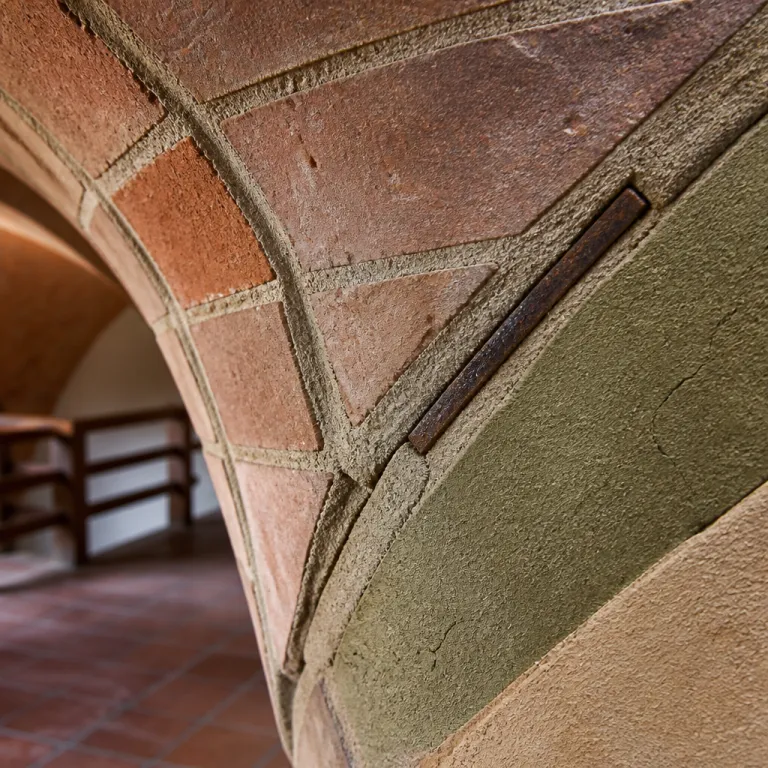
From the outside, Cristo Obrero appears almost rural, with simple brick walls and a compact form that hides its structural audacity. Step inside and the space opens into a series of double curved brick vaults, rising and falling like a calm ocean swell frozen in ceramic. The ceiling is formed by ruled surfaces, where straight brick courses create fluid waves, and the light filtering through small openings turns the structure into a living, breathing surface.
Here you see reinforced ceramic at its purest, the technique that made Dieste famous across Latin America and beyond. The church Cristo Obrero, as locals often call it, uses thin brick as both material and structure, eliminating heavy beams and creating a continuous shell that feels impossibly delicate. For couples, sitting quietly beneath these curved vaults can be as moving as any gallery visit, because the Dieste work here is both spiritual architecture and a manifesto for how humble material can achieve grandeur.
Beyond Atlántida: tracing Dieste work from Montevideo to the interior
Once you have absorbed Atlántida, extend your Dieste Uruguay route through Montevideo and into the countryside, where lesser known projects reveal other facets of his structural imagination. In Montevideo Uruguay, look for his industrial warehouse structures and transport terminals, where the same double curved logic appears in more utilitarian work. These buildings show how Dieste’s engineer thinking applied to everyday projects, turning a simple warehouse into a study in efficient form and brick economy.
Several churches beyond Atlántida deserve a place on a serious Eladio Dieste Uruguay architecture tour, especially if you are comfortable renting a car and driving inland. The church San Pedro in Durazno and other parish churches reveal how Dieste and his collaborators adapted curved walls, ruled surfaces and reinforced ceramic vaults to different communities. Each church balances structure and light differently, yet all share the same commitment to material honesty and structural clarity that defines his engineer practice.
Academic travelers may also be drawn to the University of the Republic in Montevideo, where Dieste’s influence is discussed in engineering and architecture faculties. While not every campus building is a Dieste project, the culture of structural experimentation owes much to engineer Eladio and his generation. If you are planning several days in the capital before heading to the coast, consider arranging a guided visit focused on Dieste work and other mid century projects that shaped Uruguay’s architectural identity.
The Dieste effect on Uruguay’s luxury hotels and coastal retreats
Understanding Dieste’s structural language changes how you read contemporary hotels across Uruguay, especially along the corridor from Montevideo to Punta del Este and José Ignacio. Many premium properties borrow his emphasis on material authenticity, letting brick, stone and concrete remain visible rather than hiding structure behind decoration. You start to notice how curved walls, low vaults and carefully controlled light echo the same principles that guided Eladio Dieste in his churches and warehouses.
At Fasano Las Piedras near La Barra, the architecture uses natural stone and the existing topography to create a structure that feels grown from the landscape. While it is not a Dieste project, its restrained form, respect for material and integration with the terrain resonate strongly with Dieste work and his reinforced ceramic philosophy. Couples who have just visited Cristo Obrero often comment that Fasano’s long horizontal lines and quiet structural gestures feel like a hospitality translation of Dieste Uruguay values.
Farther along the coast, the Vik properties treat architecture as a cultural statement, much as Dieste did with every church and warehouse he touched. At Bahía Vik in José Ignacio, art filled interiors and sculptural forms invite the same kind of close looking you give to a double curved vault in Atlántida, and this is where an architecture aware traveler should look for a detailed review of what eco luxury really buys you at Bahía Vik on a trusted Uruguay travel resource. When you pair these stays with visits to Dieste structures, the Eladio Dieste Uruguay architecture tour becomes a dialogue between mid century engineering and contemporary Latin America hospitality design.
Designing a one day route: from Montevideo to Atlántida and beyond
For couples short on time, a focused Eladio Dieste Uruguay architecture tour can fit comfortably into a single day between city and coast. Start in Montevideo with an early breakfast near the old port, then drive or hire a car east along the Rambla before joining the coastal highway toward Atlántida. The journey takes under an hour in light traffic, leaving generous time to experience the church of Christ Worker and its extraordinary brick structure without rushing.
Plan to spend at least an hour inside Cristo Obrero, watching how the sun shifts across the curved vaults and double curved walls. Walk slowly along the side aisles to appreciate how each brick course follows ruled surfaces, and notice how the reinforced ceramic shell eliminates the need for heavy internal supports. This is where the abstract idea of Dieste work becomes tangible, and where the phrase “Uruguayan engineer known for innovative brick structures” stops being a line in a guidebook and becomes a lived experience.
After Atlántida, continue east toward the resorts of the Costa de Oro or onward to Punta del Este for a late lunch and check in at a premium hotel that reflects Dieste Uruguay’s material sensibility. If time allows, detour inland on another day to visit church San Pedro or other Dieste related projects, turning a simple beach holiday into a layered journey through Latin America’s most quietly radical architecture. By the time you return to Montevideo Uruguay, the name Eladio Dieste will feel less like a reference and more like a thread connecting every structure, from palacio scale hotels to humble warehouses, across your Uruguayan stay.
FAQ
Who was Eladio Dieste and why does he matter for travelers?
Eladio Dieste was a Uruguayan engineer whose structural experiments with thin brick shells and reinforced ceramic transformed modern architecture in Uruguay. His churches, warehouses and public projects use curved vaults and ruled surfaces to achieve great spans with minimal material. For travelers, his work offers a powerful cultural lens on Uruguay, comparable in significance to Gaudí in Spain or Barragán in Mexico.
What is the Church of Christ Worker in Atlántida?
The Church of Christ Worker, or Cristo Obrero, is a parish church in Atlántida designed by Eladio Dieste using double curved brick vaults and undulating walls. Inside, the ceiling forms a continuous brick shell, where structure and form are inseparable. It is widely regarded as Dieste’s masterpiece and a cornerstone of any Eladio Dieste Uruguay architecture tour.
How can I visit Dieste’s works from Montevideo?
From Montevideo, you can reach Atlántida by car in under an hour along the coastal highway, making Cristo Obrero an easy day trip or a stop en route to Punta del Este. Several other Dieste projects, including industrial structures and churches, lie within a few hours’ drive in the interior. Many travelers choose to combine these visits with stays in luxury coastal hotels that reflect his material and structural philosophy.
Are Dieste’s buildings comparable to other famous architectural sites?
Dieste’s buildings are often compared to works by Gaudí or Tadao Ando because they combine technical innovation with strong emotional impact. His use of brick, curved forms and ruled surfaces creates spaces that feel both experimental and deeply human. For architecture focused travelers, visiting his churches and warehouses in Uruguay can be as meaningful as touring iconic sites in Europe or Japan.
How does Dieste influence contemporary hotels in Uruguay?
Many contemporary Uruguayan hotels echo Dieste’s emphasis on honest materials, structural clarity and integration with the landscape. Properties such as Fasano Las Piedras and Bahía Vik use exposed stone, brick and concrete, along with carefully shaped volumes, to create spaces where structure and atmosphere are closely linked. This makes them natural complements to a Dieste focused itinerary, especially for couples seeking both design depth and coastal comfort.
Sources
Facultad de Arquitectura, Diseño y Urbanismo, Universidad de la República; local tourism information from Atlántida and Montevideo; on-site visitor materials at Iglesia Cristo Obrero.