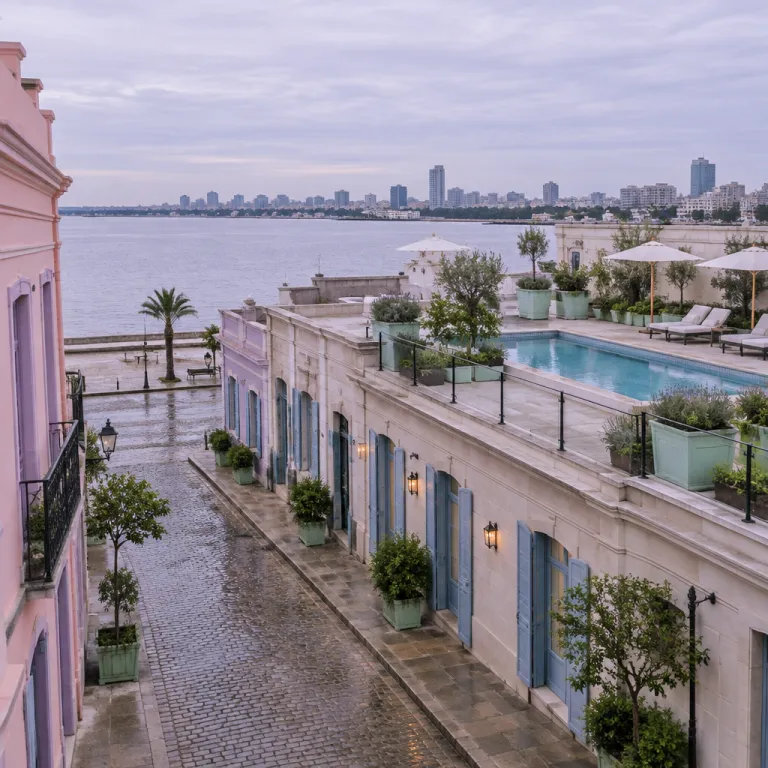
Understanding time in Uruguay, South America for refined city stays
Planning your time in Uruguay, South America shapes every luxury stay. Uruguay time follows a single national standard time, which simplifies itineraries between Montevideo, Colonia del Sacramento, and other historic cities in Uruguay. This unified time zone means your transfers, spa bookings, and private tours can be coordinated without worrying about internal clock changes or hidden time difference concerns.
The country operates on Uruguay Standard Time, known as UYT Uruguay, which is three hours behind Coordinated Universal Time (UTC−3). This standard time applies year round because Uruguay no longer uses daylight saving, so there is no seasonal shift in local time to disrupt your sleep patterns. According to the IANA time zone database, the entire country is covered by the single zone “America/Montevideo,” and the national government has confirmed that daylight saving time is currently suspended. For premium travelers arriving from the United States, México, Brasil, Argentina, or Australia, checking the current time and the exact time difference before departure helps align long haul flights with check in, dinner reservations, and evening city walks.
Montevideo sits on the south coast of Uruguay, facing the Río de la Plata and sharing similar daylight hours with many eastern cities in South America. When you check the current time in Montevideo, you are effectively checking the local time for most major cities in Uruguay, including Colonia, Carmelo, and Punta del Este. This consistency across the country makes it easier to plan multi city historic escapes that combine coastal mansions, vineyard estates, and restored town houses in one seamless itinerary.
Historic Montevideo: aligning hotel luxury with local hours
Montevideo is the capital where Uruguay time feels both relaxed and precise. The Ciudad Vieja, or Old City, concentrates many of the finest luxury hotels in carefully restored mansions, and your sense of time in Uruguay, South America will be shaped by slow mornings and late dinners. Because the current time in Montevideo follows UYT Uruguay without daylight saving, you can rely on stable daylight hours for walking tours through Plaza Independencia, the port market, and the waterfront Rambla.
When you compare time Montevideo with the current time in eastern cities of the United States, you usually face a modest time difference of one or two hours. From roughly November to March, Montevideo is typically two hours ahead of New York, while from about March to November the gap often narrows to one hour. Travelers from states on the east coast often land in the early morning local time at Carrasco International Airport (MVD), which pairs well with early check in at premium hotels that offer spa access or breakfast while your room is prepared. Guests arriving from western states or from Australia and New South Wales should consider an extra day to adjust, using the first day to stroll the harbor and enjoy long daylight hours rather than scheduling complex excursions.
Montevideo’s port connects you with the wider south region, including ferries toward Argentina and sailing routes across the Río de la Plata. Families who want to experience the river at a slower pace often choose a day charter from Colonia, and many luxury booking platforms highlight a sailing experience on the Río de la Plata with children as a refined alternative to the standard ferry. Aligning your local time and your children’s sleeping hours with these excursions ensures that the day feels indulgent rather than rushed.
Colonia del Sacramento and riverfront heritage under Uruguay time
Colonia del Sacramento is one of the most atmospheric cities in Uruguay, and its historic quarter is a UNESCO World Heritage site. Your perception of time in Uruguay, South America changes here, as cobbled streets, stone ramparts, and river sunsets slow the pace of each day. Because the town shares the same standard time and local time as Montevideo, you can plan transfers, private guides, and dinner reservations without recalculating time zones.
Many luxury travelers arrive from Buenos Aires in Argentina, crossing the river and stepping into a different country while keeping almost the same current time. The fastest ferries between Buenos Aires and Colonia typically take about one hour and fifteen minutes, while slower services can take close to three hours, so you can choose a crossing that matches your preferred pace. The time difference between Colonia and major cities in Argentina is usually negligible, which makes same day travel easy for weekend escapes. This stable Uruguay time, with no daylight saving to observe, allows hotels to schedule sunset cocktails, heritage walks, and late checkouts with predictable daylight hours throughout the year.
For those arriving from the United States, México, Brasil, or Australia, Colonia offers a gentle first day in South America to adjust to the new time zone. You can spend the first hours exploring the lighthouse, the old city gate, and the riverfront cafés before retreating to a premium hotel with river views. Travelers considering a winter stay should look at guidance such as why a July trip to Uruguay can transform your summer, which explains how year round travel works under a single standard time.
Punta del Este, Garzón, and coastal time in Uruguay, South America
The glamorous coastal arc from Punta del Este to José Ignacio and Garzón defines many luxury itineraries in Uruguay. Here, time in Uruguay, South America is measured in long lunches, late sunsets, and unhurried spa sessions overlooking the Atlantic. Despite the change in scenery from Montevideo’s harbor to the open ocean, the local time remains the same UYT Uruguay, which keeps transfers between cities in Uruguay simple.
Punta del Este shares its time zone with Montevideo and Colonia, so there is no internal time difference when you move between these major cities. This uniform standard time is especially helpful for travelers arriving from the eastern states of the United States or from México, who may be adjusting to new daylight hours and jet lag. Many premium booking platforms now highlight how Uruguay no longer uses daylight saving, which means that your coastal sunsets and dinner reservations remain aligned with the same clock throughout the year.
Inland from the coast, Garzón has become a discreet retreat for travelers seeking vineyards, art, and golf in a serene rural setting. High end stays often combine a few nights on the beach with a weekend on an estate, and curated experiences such as golf among the capybaras at Garzón Tajamares show how to use your time Uruguay side to its fullest. Because the current time is identical across this eastern zone, your driver, sommelier, and concierge can coordinate each day’s hours with precision.
Islands, river towns, and cross border time differences
Beyond the main cities in Uruguay, a series of river islands and small towns offer quieter historic escapes. These islands in the Río de la Plata and along the Uruguay River operate on the same Uruguay time as Montevideo, so your local time remains consistent even as the scenery changes. Luxury lodges and premium guesthouses in these south river regions often emphasize slow travel, encouraging guests to align their day with natural daylight rather than with rigid schedules.
When you compare time Uruguay wide with neighboring Brasil and Argentina, you will notice that most of South America in this region shares similar time zones. The time difference between Montevideo and major cities such as São Paulo, Rio de Janeiro, or Buenos Aires is often zero or just one hour, depending on whether those countries observe daylight saving. Typical nonstop flights from São Paulo to Montevideo take around two hours and forty five minutes of flight time, and the current time at arrival is often the same or just one hour different; this makes cross border itineraries that combine Uruguay with Brasil, Argentina, or even connections to México and the United States relatively straightforward to plan.
Travelers arriving from Australia or from New South Wales face a more significant time difference, which can affect how they experience the first day and night. Many luxury hotels respond by offering flexible check in hours, spa access on arrival, and curated evening programs that respect your current time and energy levels. When planning multi country journeys that include islands, river towns, and major cities, always verify the current time and any saving time policies in each destination before finalizing transfers.
Practical timing tips for luxury and premium hotel bookings
Choosing when to arrive can be as important as choosing where to stay. Because Uruguay uses a single standard time and does not observe daylight saving, you can safely plan flights, private transfers, and restaurant reservations around stable daylight hours. Many premium travelers aim to land in Montevideo in the early morning local time, which allows them to enjoy a full day while adjusting gently to the new time zone.
For guests coming from the eastern states of the United States, the time difference is usually modest, so a short nap and a late lunch often suffice to reset. Travelers from western states, México, Brasil, or Argentina may prefer to schedule their first day around spa treatments and relaxed city walks rather than tightly timed excursions. Those arriving from Australia or New South Wales should consider at least one buffer day in Montevideo or Colonia, using the stable Uruguay time to ease into South America before heading to more remote cities in Uruguay.
When booking luxury hotels online, always check whether the platform displays prices and availability in your own time zone or in local time. Confirm that check in and check out hours are listed in Uruguay time, especially if you are coordinating private drivers or regional flights between major cities and islands. Because UYT Uruguay remains constant year round, you can rely on the same standard time whether you visit in January or on a quiet Sunday in September, which simplifies every aspect of your itinerary.
Key timing figures for luxury travel in Uruguay
- Uruguay operates on a single national time zone, UYT Uruguay (UTC−3), which means there is no internal time difference between Montevideo, Colonia, Punta del Este, or inland cities; this simplifies multi city luxury itineraries.
- Uruguay does not observe daylight saving, so standard time remains constant year round; travelers do not need to adjust clocks on arrival or departure within the same trip.
- The time difference between Montevideo and New York in the United States is typically one or two hours, depending on the season in North America; Montevideo is usually two hours ahead from roughly November to March and one hour ahead from about March to November.
- Flights from São Paulo in Brasil to Montevideo usually take around two hours and forty five minutes of flight time, and the current time at arrival is often the same or just one hour different; this makes weekend historic escapes feasible for regional travelers.
- Average daylight hours in Montevideo range from about 9.5 hours in winter to over 14 hours in summer; this variation influences how travelers schedule city tours, vineyard visits, and coastal activities.
FAQ about time in Uruguay, South America for hotel stays
What time zone does Uruguay use for hotels and flights ?
Uruguay uses Uruguay Standard Time, known as UYT Uruguay, which is UTC−3 and applies across the entire country. All hotels, domestic flights, and train or bus services operate on this single standard time, so there are no internal time zones to manage.
Does Uruguay observe daylight saving time ?
Uruguay does not currently observe daylight saving time, so clocks remain on the same standard time throughout the year. This stability makes it easier for travelers to plan activities, as daylight hours shift gradually with the seasons rather than abruptly on a specific Sunday in September.
What is the time difference between Montevideo and major U.S. cities ?
The time difference between Montevideo and major cities in the United States varies by region and season. As a general guide, Montevideo is usually one to two hours ahead of eastern states and several hours ahead of western states, so travelers should confirm the current time before departure.
How should I plan check in and check out around my flight times ?
Because Uruguay time is stable year round, you can safely align hotel check in and check out with your flight schedule without worrying about seasonal clock changes. Many luxury hotels offer early check in or late check out on request, especially for guests arriving from long haul destinations such as Australia or New South Wales.
Is the local time the same in Montevideo, Colonia, and Punta del Este ?
Yes, the local time is identical in Montevideo, Colonia del Sacramento, Punta del Este, and other major cities in Uruguay. This single time zone makes it easy to combine historic city escapes, coastal stays, and rural estates in one itinerary without recalculating time differences.