Understanding where Uruguay is and why its location matters
To understand where Uruguay is, start with the wider map of South America and the southern cone. This compact country lies on the south Atlantic coast between Argentina and Brazil, with the Atlantic Ocean shaping both its climate and its relaxed coastal lifestyle. When travellers ask where Uruguay is located, they usually picture the broad Río de la Plata estuary and the Uruguay River that frame its western and northern borders.
On any detailed map of the region, you will see the country positioned east of Buenos Aires and south of Brazil, facing the south Atlantic with around 660 km of shoreline. This strategic area at the mouth of the River Plate and the Río de la Plata has long supported an open, outward looking economic culture and a strong national identity. The Uruguayan Government and the National Institute of Statistics (INE) use advanced GIS tools to map the republic Uruguay precisely, ensuring that every river, city and coastal stretch is accurately represented.
Montevideo, the capital and largest city, sits on the northern shore of the Río de la Plata, anchoring the country’s urban population and cultural life. From this southern city, ferries cross the river to Buenos Aires, while highways connect inland regions along the Uruguay River and towards Brazil. When you look at any modern map Uruguay, you will notice how compact the republic Uruguay appears, with a total area of about 176 215 km² and a population close to 3.5 million people.
How geography influences luxury and premium hotels in Uruguay
The answer to where Uruguay is becomes especially relevant when you consider luxury and premium hotel choices. This south Atlantic country enjoys a temperate climate, so high end properties in Montevideo and along the coast can operate year round with stable seasons. The combination of river estuaries, oceanfront and rolling countryside allows travellers to choose between urban sophistication, coastal glamour and rural calm within a relatively small area.
In the capital city, many premium hotels cluster along the Rambla waterfront, facing the Río de la Plata rather than the open Atlantic Ocean. Guests enjoy wide river views that feel almost maritime, while still being close to the historic centre and the main economic districts. When you study a detailed map Uruguay, you will see how Montevideo curves around the bay, giving several neighbourhoods direct access to the water and shaping the placement of luxury properties.
Further east along the coast, the famous resort area of Punta del Este sits where the Río de la Plata meets the Atlantic, creating a distinctive mix of river plate calm and ocean energy. Here, the question of where Uruguay is located translates into long sandy beaches, marinas and a cosmopolitan atmosphere that attracts regional and international guests. Inland, near the Uruguay River and in smaller cities, premium hotels often focus on wine tourism, estancias and wellness, using the country’s gentle landscapes and moderate time zone to create restful stays.
Key cities, maps and access points for premium stays
For travellers planning where to stay, it helps to link the abstract idea of where Uruguay is with concrete access points and cities. Montevideo’s international airport, located just outside the largest city, is the main gateway for long haul flights and regional connections from other South American countries. From there, the coastal highway leads east towards Punta del Este and west towards Colonia del Sacramento, tracing the edge of the Río de la Plata and the south Atlantic.
On a practical map Uruguay, you will see three main clusters of premium accommodation : Montevideo, Punta del Este and Colonia del Sacramento. The capital city offers business focused hotels near the economic centre, while Punta del Este provides resort style properties along beaches such as Playa Brava and Playa Mansa. Colonia del Sacramento, facing Buenos Aires across the river plate, combines heritage architecture with intimate high end stays, ideal for short breaks.
Many visitors arrive from Argentina by ferry, crossing the Río de la Plata from Buenos Aires to either Montevideo or Colonia del Sacramento. This route highlights exactly where Uruguay is located in relation to its neighbour, as the journey follows the broad river estuary that defines the southern border. Once in the country, the compact area and clear time zone make it easy to combine several cities in one itinerary, moving between river, ocean and countryside without long transfers.
Coastal elegance from Montevideo to Punta del Este
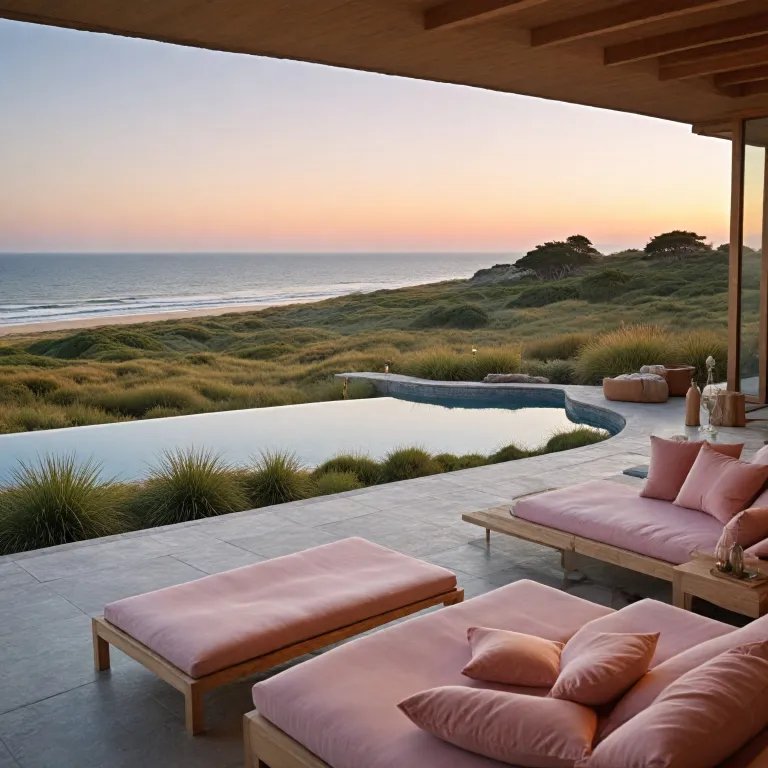
The coastal strip from Montevideo to Punta del Este illustrates how the answer to where Uruguay is directly shapes luxury hotel experiences. Along this southern shoreline, the country faces both the Río de la Plata and the open Atlantic Ocean, creating varied seascapes and microclimates. Premium hotels take advantage of this geography with sea view suites, rooftop pools and direct beach access that reflect the relaxed yet refined Uruguayan lifestyle.
In Montevideo, upscale properties line the Rambla, a long waterfront avenue that follows the curve of the river plate. Guests can walk or cycle for kilometres, watching ships move between the Uruguay River system and the south Atlantic, while still being close to theatres, museums and national landmarks. Further east, Punta del Este offers a denser concentration of high end resorts, private residences and marinas, especially around the Punta del Este peninsula and the nearby beaches.
Travellers who study a detailed map Uruguay often notice how short the distance is between Montevideo and Punta del Este, making it easy to split a stay between the capital and the resort area. The region’s position within South America also means that many visitors combine Uruguay country stays with time in Buenos Aires or southern Brazil. For an in depth look at urban options, you can explore a curated overview of city centre properties at refined comfort at Uruguay city centre luxury hotels, which focuses on premium experiences in the largest city.
Cultural context, language and practical details for guests
Understanding where Uruguay is also involves its cultural and linguistic setting, which directly influences service in luxury hotels. This southern cone country is officially Spanish speaking, and staff in premium properties usually speak both Spanish and English, especially in Montevideo and Punta del Este. The national character is often described as reserved yet warm, with a strong emphasis on hospitality, safety and respect for personal space.
From an economic perspective, Uruguay country policies prioritise stability, which reassures international guests booking high value stays. The Uruguayan Government works with the National Institute of Statistics (INE) to monitor tourism trends, population data and regional development, supporting infrastructure around the main city and resort areas. When guests ask where Uruguay is located in terms of time zone, they will find it aligned with the eastern part of South America, which simplifies travel from Argentina, Brazil and many other countries in the region.
On a practical level, premium hotels often provide detailed local maps showing the surrounding area, including access to the Uruguay River, the Río de la Plata and the Atlantic Ocean. These maps help guests visualise exactly where Uruguay sits between neighbouring countries and how close they are to key attractions. Whether you stay in Montevideo, Punta del Este or Colonia del Sacramento, you will feel the influence of the river plate and the south Atlantic in the cuisine, architecture and relaxed daily rhythm.
Strategic planning for luxury stays in Uruguay’s compact territory
Because the country has a relatively small area and a concentrated population, planning a luxury itinerary becomes a matter of thoughtful sequencing rather than long distances. Travellers who first ask where Uruguay is often end up appreciating how its compact geography allows for varied experiences within a few days. You can start in the largest city, Montevideo, continue along the coast to Punta del Este, then finish with a quieter stay near the Uruguay River or in Colonia del Sacramento.
When you look at a high resolution map Uruguay, you will see how the Uruguay River forms the western boundary with Argentina, while the Atlantic Ocean and the Río de la Plata shape the southern and eastern edges. This position in South America’s southern cone gives the republic Uruguay a maritime yet sheltered character, ideal for relaxed, high quality tourism. The combination of river plate estuaries, rolling inland plains and a stable time zone supports both leisure and business travel throughout the year.
For travellers comparing countries in the region, understanding exactly where Uruguay is located can clarify its role as a calm, secure base between larger neighbours. The national focus on renewable energy, urban development around Montevideo and careful coastal planning supports a premium hospitality offer that feels both modern and grounded. By aligning your route with the main river systems, the south Atlantic coastline and the key city hubs, you can make the most of Uruguay country’s geography while enjoying refined, well managed hotel experiences.
Key statistics about Uruguay’s geography and tourism context
- Total area of Uruguay is approximately 176 215 km², making it one of the smaller countries in South America by land size.
- The population is around 3.5 million people, with a significant share living in Montevideo and its metropolitan area.
- Uruguay has about 660 km of coastline along the Río de la Plata and the Atlantic Ocean, supporting major destinations such as Montevideo and Punta del Este.
Frequently asked questions about where Uruguay is
What is the capital of Uruguay and where is it situated ?
The capital of Uruguay is Montevideo, located on the northern shore of the Río de la Plata in the southern part of the country. It is the largest city and the main economic and cultural centre, facing the broad estuary that connects to the Atlantic Ocean. Montevideo’s position makes it a natural hub for both river and sea routes in the southern cone.
Which countries border Uruguay and how does this affect travel ?
Uruguay is bordered by Argentina to the west and Brazil to the north and northeast, with the Atlantic Ocean to the south and southeast. This location in South America allows easy overland and ferry connections, especially between Buenos Aires, Montevideo and Colonia del Sacramento. Many travellers combine stays in these neighbouring countries, using Uruguay as a tranquil, well organised base.
What is the highest point in Uruguay and does it influence tourism ?
The highest point in Uruguay is Cerro Catedral, at 513.66 metres above sea level. While not a major mountaineering destination, the surrounding highlands contribute to the country’s varied landscapes and rural tourism options. Visitors interested in nature often combine coastal stays with excursions to these inland areas for hiking, wine tasting and estancia experiences.
References : Uruguayan Government – https://www.presidencia.gub.uy/ ; National Institute of Statistics (INE) – https://www.ine.gub.uy/ ; Geographical Society of Uruguay – official publications on national mapping and GIS use.